Foam Play Mat or Baby Gym for Crawling Babies? Which Is Better?

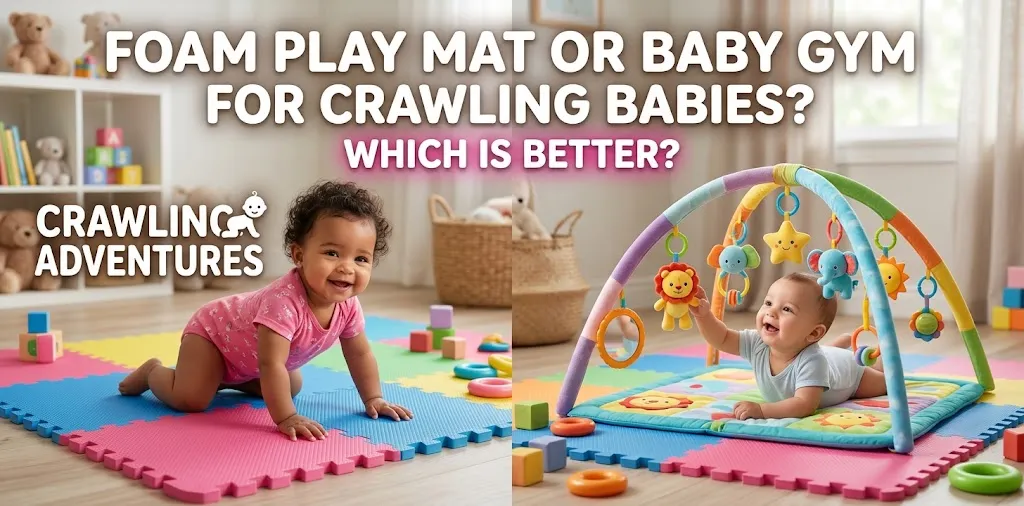
For a baby who is already crawling or starting to crawl, a foam play mat is usually the better choice because it gives the baby more open floor space to move, practice crawling, and explore. A baby gym is more useful earlier, when babies spend more time reaching, kicking, and doing supervised tummy time. For many families, using a baby gym on top of a larger play mat works best.
What Is the Difference Between a Foam Play Mat and a Baby Gym?
A foam play mat and a baby gym are designed for different stages of play, even though both can be useful during infancy.
A foam play mat is mainly a cushioned floor surface. It gives a baby a defined area for tummy time, rolling, sitting, crawling, and eventually standing and playing.
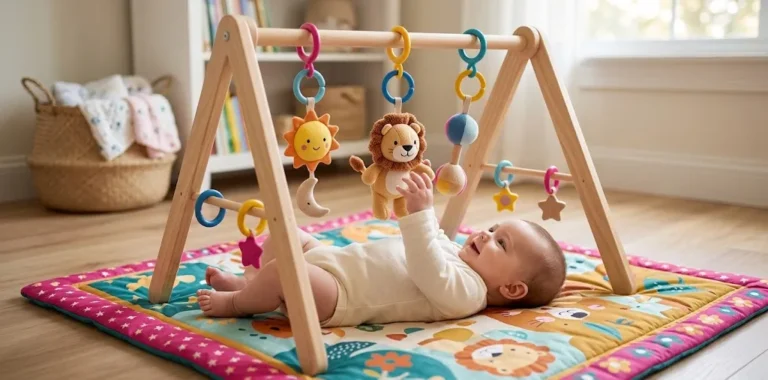
A baby gym usually combines a soft mat with arches, hanging toys, mirrors, rattles, or other activity features. These encourage babies to look, reach, grab, kick, and interact with toys.
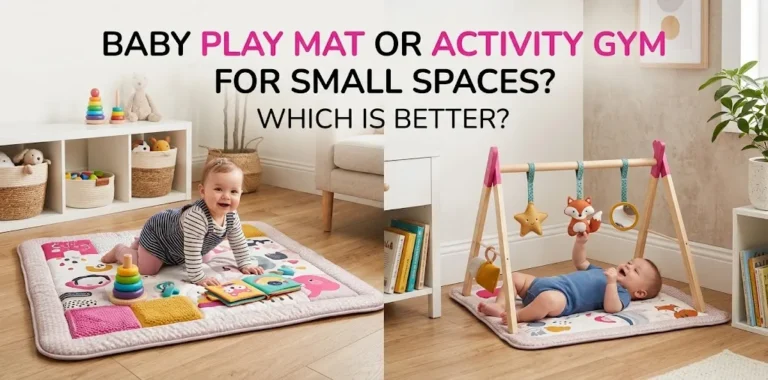
The key difference is simple: the mat creates space for movement, while the gym creates activities for reaching and interaction.
The American Academy of Pediatrics notes that active play, reaching, grabbing, and supervised tummy time help babies build strength and develop skills needed for milestones such as sitting and crawling.
| Feature | Foam Play Mat | Baby Gym |
|---|---|---|
| Open crawling space | Excellent | Limited |
| Tummy time | Excellent | Very good |
| Reaching and grabbing | Good with added toys | Excellent |
| Rolling practice | Excellent | Good |
| Sitting practice | Excellent | Good |
| Crawling practice | Excellent | Limited |
| Sensory play | Depends on design | Usually strong |
| Easy to clean | Usually easy | Depends on fabric and toys |
| Useful as baby grows | Usually longer | Often more limited |
| Best use | Floor movement and exploration | Interactive early play |
Why a Foam Play Mat Is Better for Crawling
Once a baby becomes mobile, having enough clear floor space becomes more important than having lots of hanging toys.
A crawling baby needs room to move forward, turn around, reach for objects, and experiment with different movements. A large play mat can create a consistent surface where parents can place a few safe toys around the baby and encourage movement.
A foam mat can also make hard floors more comfortable for play. This can be especially useful in homes with hardwood, laminate, or tile floors.
However, a play mat does not make crawling itself safer in every situation. Parents still need to keep small objects, cords, sharp items, and other hazards away from the baby’s play area.
When a larger mat makes more sense
A larger foam mat is particularly useful if your baby:
- Is already crawling or scooting
- Frequently rolls and changes direction
- Is beginning to pull up
- Likes exploring different toys
- Spends a lot of awake time playing on the floor
- Needs more space than a small activity gym provides
For example, a baby who has started crawling toward a toy may quickly move beyond the edges of a small baby gym. A larger play mat gives that baby more room to continue moving instead of constantly repositioning the baby.
When a Baby Gym Is Better
A baby gym can be more useful before crawling becomes the main activity.
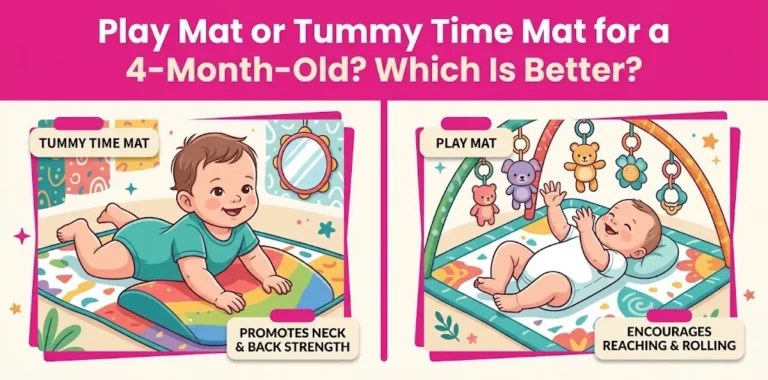
The hanging toys give babies reasons to look upward, reach, kick, grasp, and interact. These activities can make supervised tummy time more interesting, especially for babies who get bored quickly.
The AAP specifically recommends supervised tummy time while babies are awake and notes that toys placed within reach can encourage babies to reach and develop the muscles needed for movement.
A baby gym may be a better choice when your baby:
- Is still spending much of the day lying down
- Is learning to reach and grab
- Enjoys looking at hanging toys
- Is doing regular tummy time
- Has not started crawling yet
- Has limited floor space
A gym is not necessarily a replacement for open floor play, though. As your baby becomes more mobile, the value of a larger clear play area increases.
Foam Play Mat vs. Baby Gym: Which One Should You Buy First?
If you are buying only one product specifically for a crawling baby, I would choose the foam play mat.
The reason is not that a foam mat is more entertaining. It is that crawling requires space.
A baby gym can be excellent for early developmental play, but a crawling baby can quickly outgrow its usable floor area. A good play mat can continue to be useful through crawling, sitting, standing, and toddler play.
That makes the mat the more practical single purchase for a baby who is already becoming mobile.
Choose a foam play mat if your baby is already crawling
Look for a mat that provides:
- Enough open space for crawling
- A stable surface that does not slide easily
- Easy cleaning
- A design without loose or detachable small pieces
- A thickness and construction appropriate for floor play
- Materials and safety information that are clearly provided by the manufacturer
A foldable mat can also be convenient if you need to store it regularly.
Choose a baby gym if your baby is not crawling yet
If your baby is still mainly doing tummy time and reaching for objects, a baby gym can offer more engaging activities in a relatively small space.
You can later add a larger play mat as your baby’s movement increases.
Can You Use a Baby Gym on a Foam Play Mat?
Yes. In many homes, this is actually a practical combination.
The foam play mat provides the larger floor area, while the baby gym creates a smaller activity zone within it.
For a younger baby, you might spend more time using the gym for supervised tummy time and reaching activities. As the baby begins rolling and crawling, you can gradually rely more on the open area of the mat.
This approach also means you do not have to choose between the two products if your budget and available space allow both.
What Should You Look for in a Crawling Baby’s Play Mat?
The most important feature is not how soft or colorful the mat looks. Think about how your baby will actually use it.
Size and usable space
Crawling babies move quickly. A mat that looks large enough when a baby is lying down may feel small once the baby starts moving around.
Measure the available floor area before buying. If you have room, a larger mat can be more useful than a compact activity mat.
Surface stability
A mat that moves easily across the floor can become frustrating during active play. Look for a design that stays reasonably stable on your type of flooring.
Also check the edges and seams regularly, especially if the mat folds or connects in sections.
Cleaning
Babies spend a lot of time touching the floor and then putting their hands in their mouths. Food, drool, spit-up, and other messes are also common.
A wipe-clean surface can make everyday use much easier.
Materials and product information
Do not rely only on phrases such as “non-toxic” or “baby-safe” in a product listing. Check the manufacturer’s safety information and instructions, and look for products made for infant or children’s use.
If a product has been recalled, stop using it and follow the recall instructions. For US consumers, the Consumer Product Safety Commission is an important place to check children’s product recalls.
What Should You Look for in a Baby Gym?
A baby gym should give your baby reasons to look, reach, grab, and interact.
Useful features can include:
- Hanging toys that can be reached easily
- A mirror
- Different textures
- Simple sounds or rattles
- Detachable toys
- A washable mat
- A stable frame or arches
- Toys that can be removed as the baby grows
Avoid choosing a gym simply because it has the largest number of toys. A few well-positioned, age-appropriate activities can be more useful than a crowded play area.
Also inspect hanging toys and attachments regularly. As babies become stronger and more mobile, equipment that was appropriate for a younger baby may need to be adjusted or removed according to the manufacturer’s instructions.
Foam Play Mat Safety for Crawling Babies
A play mat is intended for awake, supervised play, not as a substitute for a safe sleep surface.
The AAP recommends that babies sleep on a firm, flat surface in an appropriate sleep space and warns against using soft or padded play spaces as sleeping areas.
If your baby falls asleep while playing, move them to their appropriate sleep space rather than treating the play mat as a sleeping surface.
During floor play, also check the surrounding area for hazards. Crawling changes what a baby can reach, so something that was previously out of reach may suddenly become accessible.
What About Foam Tiles With Small Puzzle Pieces?
Interlocking foam tiles can create a large play area, but parents should pay close attention to the design.
If the product has removable pieces or small components, inspect them regularly for damage, separation, or pieces that could become accessible to a child.
For a young crawler, a one-piece or foldable mat may be simpler to manage than a mat made from many small pieces.
The goal is not simply to find the softest mat. You want a stable, practical play surface that fits your baby’s stage of development and your home.
Two Real-Life Ways to Choose
Imagine a 5-month-old who is doing tummy time, reaching for toys, and rolling but is not yet crawling. A baby gym may provide more useful interaction because the baby can spend time reaching for hanging toys while supervised.
Now consider a 9-month-old who crawls across the living room to grab a toy. A large foam play mat is likely to be more useful because the baby’s main activity is now movement and exploration.
These are not strict age rules. Babies develop at different rates, so the better choice depends more on what your baby is doing now than on a specific month.
Is a Foam Play Mat or Baby Gym Better for Tummy Time?
Both can work well for tummy time, but they serve different purposes.
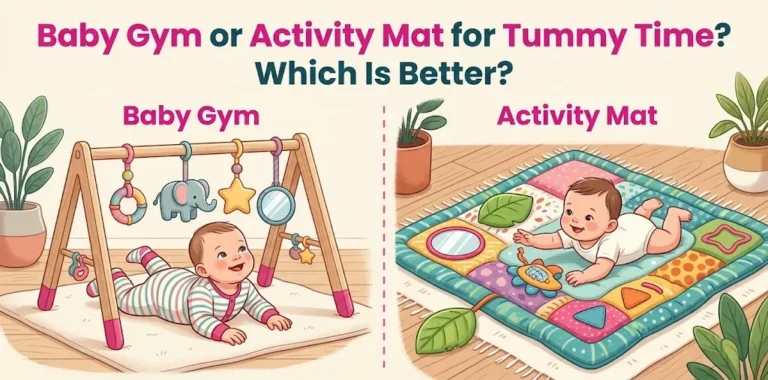
A baby gym can make tummy time more engaging by giving the baby toys, mirrors, and other things to look at or reach for. A foam mat provides a larger, comfortable floor area where you can place toys around the baby.
The AAP recommends starting tummy time early while the baby is awake and supervised and gradually increasing it as the baby becomes more comfortable.
For a baby who dislikes tummy time, putting an interesting toy or a parent’s face just within reach can encourage the baby to lift their head and reach forward.
Is a Foam Play Mat Worth It for a Crawling Baby?
For most families with a crawling baby, yes.
The main value is not that foam somehow teaches a baby to crawl. Rather, it creates a defined area for floor play and movement.
A good mat can remain useful after crawling too. Once your child starts sitting, pulling up, standing, and playing with toys, the same floor space can continue to serve as a play area.
That longer useful period can make a larger play mat a practical purchase compared with an activity product designed mainly for younger babies.
Frequently Asked Questions
Can a crawling baby use a baby gym?
Yes, but its usefulness may decrease as the baby becomes more mobile. A crawling baby can still enjoy the toys, but a larger open play area usually gives them more room to move and explore.
What size play mat is best for a crawling baby?
There is no single size that works for every home. Choose the largest practical mat that fits your available floor space, because crawling babies can quickly move beyond a small activity area.
Should I buy a foam play mat or baby gym first?
If your baby is already crawling, a foam play mat is usually the more useful first purchase. If your baby is still mainly doing tummy time and reaching, a baby gym may provide more engaging activities at that stage.
The Bottom Line
For crawling babies, a foam play mat usually makes more sense than a baby gym because crawling requires open space. A baby gym is more valuable when your baby is still focused on tummy time, reaching, kicking, and grabbing.
If your baby is between stages, you do not necessarily need to choose one forever. A baby gym placed on a larger play mat can support early interactive play and later give your growing baby plenty of room to crawl and explore.
The practical tip is simple: buy for what your baby is doing now, but choose a setup that will still work as your baby becomes more mobile.