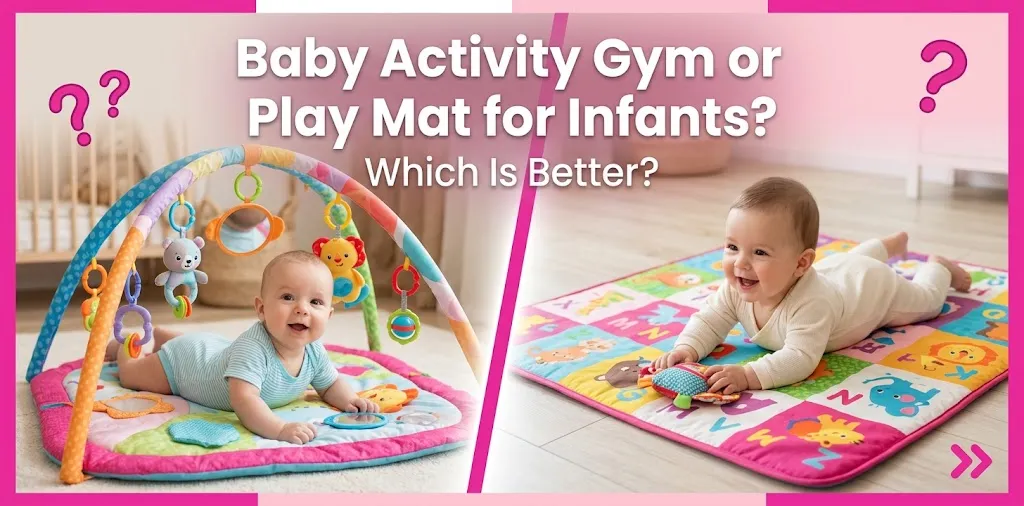
Baby Activity Gym or Play Mat for Infants? Which Is Better?

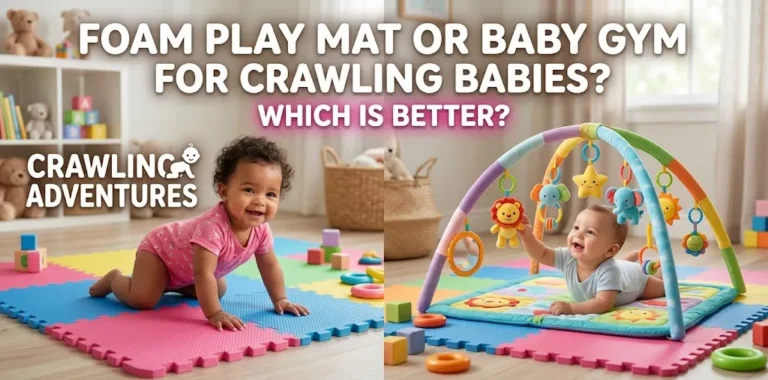
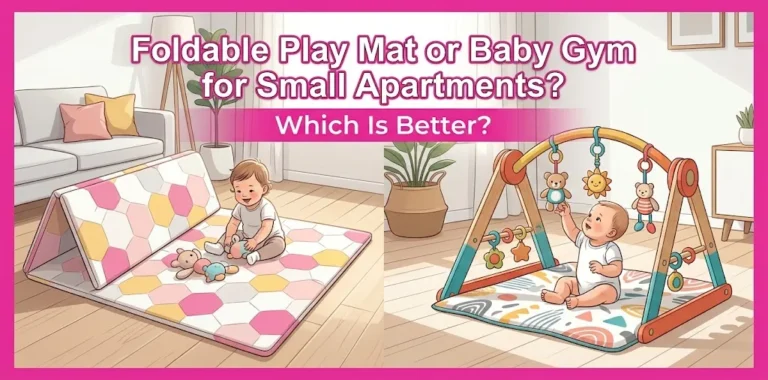
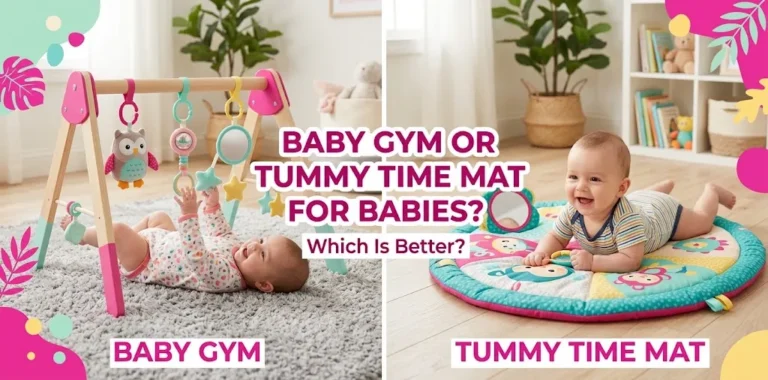
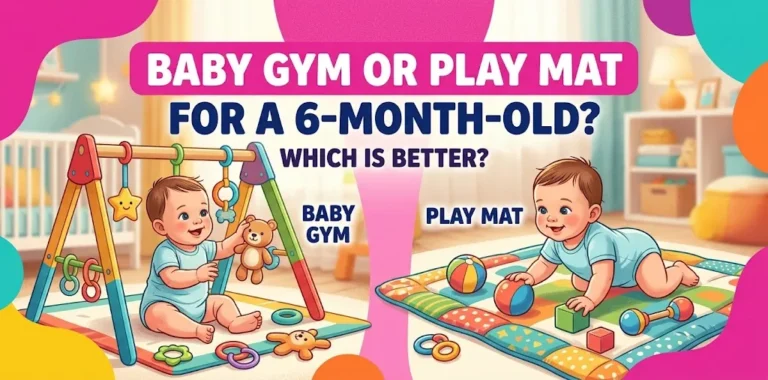
A baby activity gym and a simple play mat serve different purposes, so neither is automatically better for every infant. A play mat gives your baby a comfortable, open surface for floor play and tummy time, while an activity gym adds hanging toys and interactive features that encourage reaching, kicking, looking, and grabbing. For many young infants, an activity gym placed on a suitable play mat offers the most versatile setup.
Baby Activity Gym vs. Play Mat at a Glance
| Feature | Baby Activity Gym | Simple Play Mat |
|---|---|---|
| Main purpose | Interactive floor play | Comfortable floor surface |
| Tummy time | Good, especially with visual toys | Good |
| Hanging toys | Usually included | Usually not included |
| Reaching and kicking | Strong opportunity | Depends on added toys |
| Sensory play | Usually more varied | More basic |
| Open movement space | Moderate | Usually better |
| Cleaning | Depends on design | Often simple |
| Storage | Can take more space | Often easier |
| Long-term usefulness | Depends on design | Often useful as baby becomes mobile |
| Best for | Babies who enjoy interactive toys | Families wanting a simple, flexible floor space |
The key difference is simple: a play mat is primarily the surface, while an activity gym adds a play system on top of that surface. Many products combine both, which is why the terms can be confusing.
What Is a Baby Activity Gym?
A baby activity gym is a floor-based play area designed for infants, usually with arches or another structure holding toys above the baby.
Depending on the model, it may include:
- Hanging rattles
- Mirrors
- High-contrast patterns
- Textured toys
- Crinkle fabrics
- Teethers
- Kick-activated toys
- Music or sounds
- Detachable toys
These features give a young baby things to look at, reach toward, touch, and kick.
That can make an activity gym particularly useful during the stage when a baby spends a lot of time lying on their back and is beginning to discover how their movements affect the world around them. The American Academy of Pediatrics notes that a play mat with toys suspended above a baby can provide opportunities to kick and reach during active play.
Why infants may enjoy an activity gym
Young babies do not need complicated toys to learn through play. A toy hanging above them can be enough to encourage visual attention and movement.
For example, a baby may:
- Look at a hanging toy.
- Move an arm toward it.
- Accidentally touch it.
- Notice that it moves or makes a sound.
- Try reaching for it again.
That simple process gives the baby a chance to explore cause and effect.
What Is a Baby Play Mat?
A baby play mat is mainly a clean, cushioned surface where an infant can spend supervised floor-play time.
It can be useful for:
- Tummy time
- Lying on the back
- Rolling practice
- Reaching for toys
- Parent-and-baby play
- Early movement
- Later crawling and floor play
A basic mat does not necessarily come with toys. Parents can place age-appropriate toys, books, or a baby-safe mirror nearby and change them as the baby’s interests develop.
The American Academy of Pediatrics describes the clean floor, nap mat, or secured blanket as natural places for tummy time and emphasizes giving babies different positions and opportunities for movement throughout the day.
Which Is Better for a Young Infant?
For a young infant who is not yet mobile, an activity gym is usually more engaging because it combines a play surface with toys that encourage looking, reaching, and kicking.
A simple play mat can still be the better choice if you already have plenty of suitable toys, want more open space, or expect to use the mat well beyond the early infant stage.
The choice becomes clearer when you consider what you want the product to do rather than simply asking which one has more features.
Choose an activity gym if your priority is interactive play
An activity gym makes sense if you want a ready-made setup that gives your baby things to watch and reach for.
It can be especially useful during the early months when your baby is mostly playing from the floor.
For example, a 2-month-old may spend part of supervised awake time looking at a hanging toy and practicing head control during tummy time. The CDC lists holding the head up while on the tummy and looking at a toy for several seconds among common 2-month milestones.
Choose a play mat if your priority is flexibility
A simple mat gives you more freedom to change the play environment.
You can use it with:
- A few favorite toys
- Soft books
- A baby-safe mirror
- Tummy-time toys
- Your own interaction and games
This can also be useful once your baby starts rolling and needs more open floor space.
Activity Gym vs. Play Mat for Tummy Time
Both can work well for tummy time.
The important factor is not whether the product is labeled a “gym” or a “mat.” What matters is that your baby has a suitable surface and opportunities to move, look, reach, and interact while awake and supervised.
The CDC recommends placing an awake baby on their tummy and putting toys at eye level to encourage head lifting. It also emphasizes moving a sleepy baby to a safe sleep space rather than leaving them on the play surface.
An activity gym can make tummy time more interesting because toys or mirrors can give your baby something to look toward.
A plain play mat can work just as well when you place an appropriate toy or mirror nearby.
Don’t confuse tummy-time equipment with sleep equipment
A play mat or activity gym is for awake, supervised play.
It should not become a sleeping surface just because a baby happens to fall asleep there. For sleep, follow safe-sleep guidance and use an appropriate firm, flat sleep surface.
Which One Is Better for Development?
Neither product automatically makes a baby develop faster.
The value comes from how the baby uses the space and how caregivers interact with them.
An activity gym can provide opportunities for:
- Looking
- Reaching
- Grasping
- Kicking
- Tracking moving objects
- Exploring cause and effect
A simple play mat provides room for:
- Tummy time
- Stretching
- Rolling
- Reaching
- Moving arms and legs
- Parent-child interaction
The CDC’s milestone guidance shows why these basic activities matter: by around 2 months, many babies are beginning to hold their heads up during tummy time, move both arms and legs, and look at toys for several seconds.
The goal isn’t to make every play session educational. Babies also learn through ordinary interaction, movement, talking, looking at faces, and exploring their surroundings.
When a Play Mat May Be the Better Buy
An activity gym can be more interesting at first, but a simple play mat may offer better value for some families.
A play mat may make more sense when:
- You already own several infant toys.
- You want a larger open area.
- You have limited storage space.
- You want something that can remain useful as your baby becomes mobile.
- You prefer a simple, low-feature setup.
- You want to rotate toys instead of having everything attached to one product.
For example, imagine a family already has a few rattles, soft books, and a baby-safe mirror. A large washable play mat may provide everything they need without adding another bulky activity center.
When a Baby Activity Gym Is Worth It
An activity gym may be worth the extra cost when you want an all-in-one early play station.
It can be particularly convenient if you want:
- Toys already positioned within the baby’s view
- Several sensory elements in one place
- Hanging toys for reaching practice
- A dedicated tummy-time setup
- Detachable toys that can be used separately
- A design that changes as the baby grows
Some gyms also convert between different play positions, which can make them useful beyond the earliest lying-down stage. However, more features do not automatically mean more developmental value.
A gym with five simple, well-positioned toys may be more useful to your baby than one with dozens of distracting features.
What Should You Look for When Buying Either One?
A safe and stable design
Check that arches, toy attachments, and other parts are firmly secured.
Look closely at anything a baby could pull, chew, or put in their mouth. Small parts can become choking hazards if they detach.
This isn’t just a theoretical concern. The U.S. Consumer Product Safety Commission has issued recalls involving baby gyms because components could create choking or suffocation hazards. In January 2026, for example, CPSC recalled a convertible baby gym because its floor mat could obstruct an infant’s breathing.
Easy cleaning
Babies drool, spit up, and eventually explore toys with their mouths.
A removable or washable mat can make everyday cleanup much easier. For activity gyms, check whether the fabric can be removed and washed and whether plastic toys can be wiped clean.
Appropriate visual stimulation
Young babies may respond well to clear shapes, faces, contrasting patterns, and objects that are easy to see.
You do not need flashing lights and electronic sounds to create an interesting play environment. A simple hanging toy can give an infant a reason to look, reach, and move.
Enough room for movement
Think beyond the newborn stage.
A very small mat may work when your baby mostly stays in one place but become frustrating once they start rolling. If you are buying one product to use for several months, consider how much floor space it provides.
A design that matches your home
A product that is difficult to fold, clean, or store may end up being used less often.
Before buying, consider where you will actually use it. A smaller activity gym may be convenient in a nursery, while a larger floor mat may make more sense in a living room where your baby plays with a caregiver.
What About Musical Activity Gyms?
Musical gyms can add another type of feedback to play.
For example, a baby may kick a panel and hear a sound. That gives the baby immediate feedback that their movement caused something to happen.
That can be fun and may encourage repeated movement, but music is not required for meaningful infant play. Talking to your baby, singing, showing them objects, and responding to their sounds are also valuable forms of interaction. The CDC recommends talking, singing, playing, and interacting with babies as part of everyday development.
If you choose a musical gym, consider whether the volume can be controlled and whether the electronic features can be turned off when you want quieter play.
What If You Can Only Buy One?
If your baby is very young and you want a ready-to-use interactive play area, choose a baby activity gym with a comfortable mat.
If you already have infant toys and want something that will remain useful as your baby starts rolling, crawling, and exploring, a larger play mat may be the smarter purchase.
For many families, the best setup is actually not an either-or choice: use a play mat as the base and add an activity gym or separate toys on top.
That gives you a comfortable floor area while allowing you to change the activities as your baby’s abilities and interests change.
FAQ
Is a baby activity gym better than a play mat?
Not necessarily. An activity gym offers more built-in opportunities for reaching, kicking, and sensory exploration, while a play mat provides a simpler and more flexible floor space. The better choice depends on your baby’s stage and how you plan to use it.
Can a newborn use a baby activity gym?
Many baby activity gyms are designed for use from the early months, but parents should always follow the specific product’s age and safety instructions. Newborns should use any gym only for awake, supervised play, and tummy time should be done while the baby is awake and watched.
Do babies really need an activity gym or play mat?
No. Babies can play and practice movement without either product. A clean, appropriate floor surface, caregiver interaction, tummy time, and a few safe age-appropriate objects can provide plenty of opportunities for early play.
The Bottom Line
For most young infants, a baby activity gym is the better choice if you want built-in toys that encourage looking, reaching, kicking, and exploration. A play mat is the better choice if you value open space, simplicity, flexibility, and longer-term floor use.
If your budget allows only one purchase, think about your baby’s current stage rather than buying the product with the most features. A safe, easy-to-clean setup that gives your baby plenty of supervised opportunities to move and interact is more useful than a complicated gym that rarely gets used.