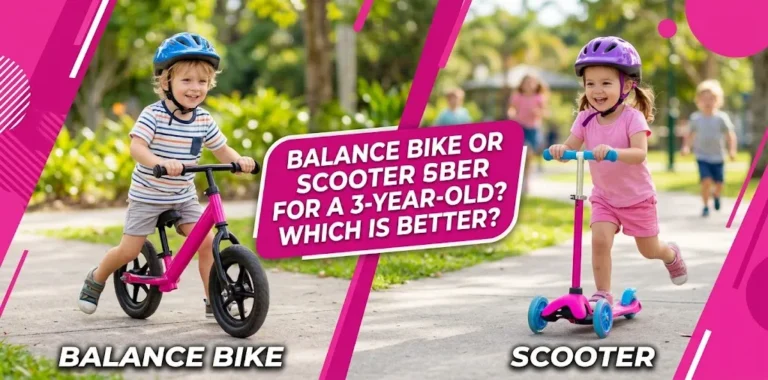
Balance Bike or Scooter for Beginner Toddlers? Which Is Better?

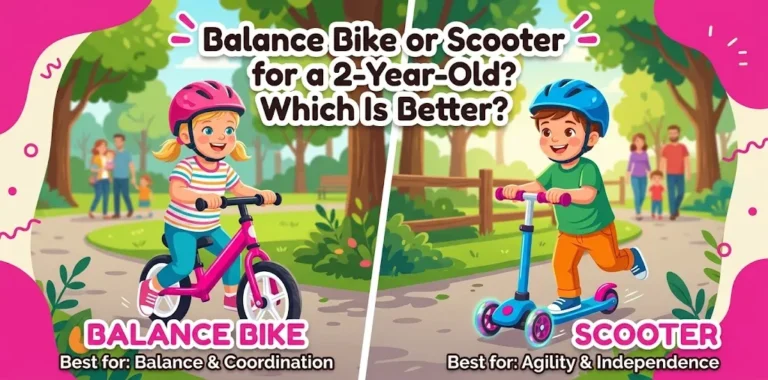
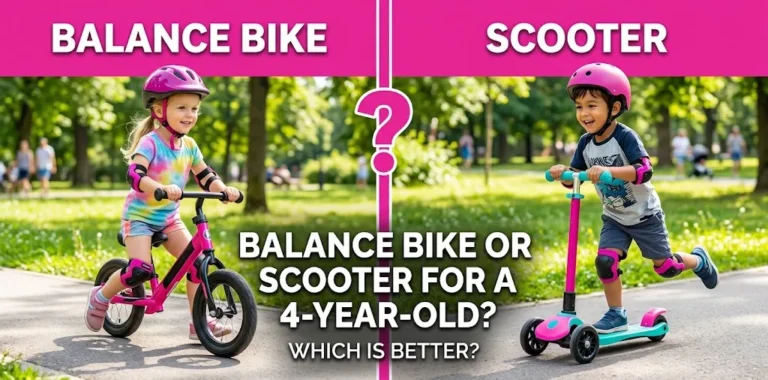
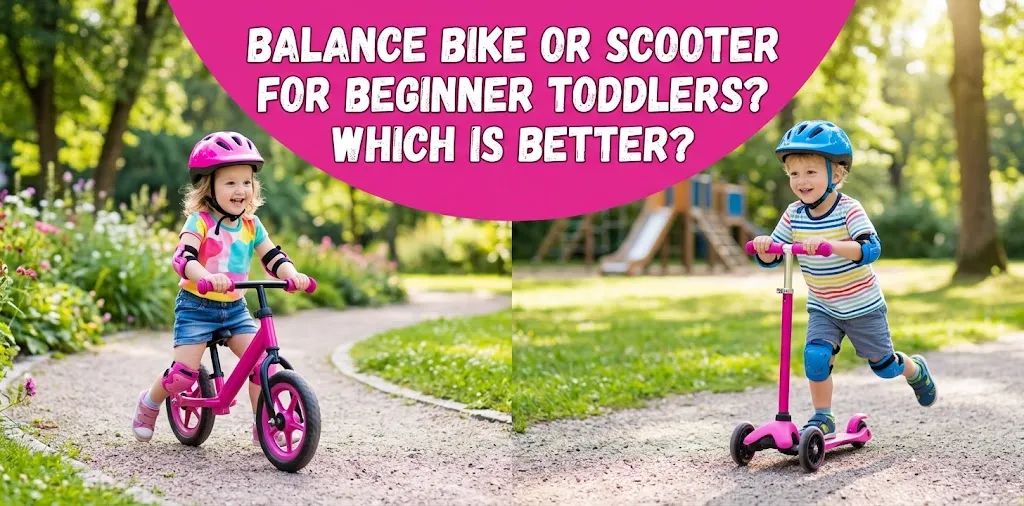
For most beginner toddlers, a balance bike is the better choice if your main goal is preparing them for a future pedal bike. A three-wheel scooter may be easier for some children to enjoy right away, especially those who prefer standing and need more stability. The best choice depends on your toddler’s readiness, confidence, and how they like to play.
Both can be fun first ride-on toys, but they teach different skills.
| Factor | Balance Bike | Three-Wheel Toddler Scooter |
|---|---|---|
| Main riding position | Sitting | Standing |
| Balance practice | Strong focus on two-wheel balance | Builds standing balance and coordination |
| Learning curve | May take more time at first | Often feels easier initially |
| Future bike preparation | Very useful | Less directly related |
| Best for | Kids interested in biking and gliding | Kids who enjoy standing and scooting |
| Beginner stability | Feet stay close to the ground | Three wheels provide a stable base |
| Typical use | Longer outdoor riding and gliding | Short rides, sidewalks, and casual play |
Why a Balance Bike Is Often the Better First Choice
A balance bike has no pedals. Your toddler sits on the seat, pushes along with their feet, and gradually learns to glide while steering.
That makes it especially useful for children who may eventually move to a regular bicycle.
The biggest advantage is simple: your child can practice balancing and steering before adding pedaling to the challenge. When they later try a pedal bike, they may already understand how to stay upright and control the bike.
A balance bike can also feel reassuring for a beginner because the child’s feet are close to the ground. At first, they may simply walk while sitting on it. Later, those short steps can turn into longer glides.
A balance bike may be the better choice if your toddler:
- Walks and runs confidently
- Enjoys being active and moving quickly
- Shows interest in bicycles
- Has access to a smooth driveway, park, or open path
- Is likely to move to a pedal bike later
For example, imagine a 2-year-old who loves running around the park and tries to copy older children on bikes. A lightweight, properly fitted balance bike may give that child a natural way to start learning riding skills.
When a Scooter May Be Better for a Beginner
A toddler scooter is not automatically the worse option. For some children, it may actually be the more enjoyable first ride.
Most beginner-friendly toddler scooters have three wheels, which gives the child a wider, more stable base than a traditional two-wheel scooter. The child stands on the deck, holds the handlebars, and pushes with one foot.
A scooter can be a good match for a toddler who is hesitant about sitting on a bike or simply prefers standing and moving around.
A scooter may be the better choice if your toddler:
- Likes standing rather than sitting
- Is cautious about trying new ride-on toys
- Wants something that feels simple and playful
- Has smooth sidewalks or paved areas for riding
- Shows little interest in bicycles
For example, a cautious toddler might refuse to sit on a balance bike but happily step onto a stable three-wheel scooter. In that situation, the scooter may be the better first purchase because the child will actually enjoy using it.
The goal is not to force a particular type of ride-on. A toy that stays unused in the garage teaches nothing.
The Biggest Difference: What Skills Does Each One Build?
The choice becomes easier when you focus on what your child is actually learning.
Balance bikes focus more directly on cycling skills
A balance bike helps a child practice:
- Balancing while moving
- Steering
- Coordinating body movements
- Controlling speed
- Gliding
These skills are closely connected to riding a regular bicycle later.
Scooters focus on a different type of coordination
A toddler scooter can help children practice:
- Standing balance
- Steering
- Pushing with one foot
- Coordinating movement
- Controlling direction
A scooter can still be excellent for active outdoor play. It simply does not provide the same direct preparation for pedal-bike riding as a balance bike.
Which One Is Easier for a Toddler to Learn?
There is no single answer because toddlers develop at different speeds.
A three-wheel scooter may feel easier immediately because it has a stable base. Some children quickly understand how to stand, push, and roll.
A balance bike may take longer at the beginning. A child first needs to feel comfortable sitting, walking the bike forward, steering, and eventually lifting their feet to glide.
However, some toddlers find the balance bike surprisingly natural because they can keep both feet near the ground.
Instead of asking only, “Which one is easier?” it is better to ask:
Which movement feels more natural for my child right now—sitting and gliding or standing and pushing?
Your Toddler’s Size Matters More Than the Number on the Age Label
Age recommendations are helpful, but they should not be the only thing you check.
Two children who are both 2 years old may have very different heights, coordination, confidence, and physical abilities.
For a balance bike
Your toddler should be able to:
- Get on and off comfortably
- Sit without struggling
- Reach the ground comfortably with their feet
- Hold and control the handlebars
A bike that is too large can make learning frustrating and less safe.
For a scooter
Your toddler should be able to:
- Stand comfortably on the deck
- Reach the handlebars without stretching
- Push and stop with control
- Keep the scooter manageable at their skill level
Always check the manufacturer’s recommended age, height, and weight limits for the specific model.
Don’t Compare a Balance Bike With the Wrong Type of Scooter
This is an important detail that parents sometimes miss.
A three-wheel toddler scooter and a two-wheel scooter are very different for a beginner.
For a young child who is new to scooters, a beginner-oriented three-wheel design is generally a more suitable comparison than a traditional two-wheel scooter. Three-wheel and lean-to-steer designs are commonly marketed for younger beginners because they provide additional stability.
So if you’re choosing between:
- A beginner balance bike
- A beginner three-wheel scooter
…compare how each fits your child’s current skills rather than assuming all scooters are equally easy.
Choose a Balance Bike if This Is Your Main Goal
A balance bike is probably the stronger choice when your main goal is:
“I want my toddler to build confidence and eventually learn to ride a regular bike.”
It gives your child a chance to learn the balance and steering side of cycling without worrying about pedals at the same time.
This can make the balance bike a purchase with a clear progression: walking → scooting → gliding → eventually trying a pedal bike.
Choose a Scooter if This Sounds More Like Your Child
A scooter may be the better choice when your main thought is:
“I want something simple and fun that my toddler will enjoy riding right now.”
Some children are more motivated by immediate fun than by learning a skill for a future bike.
That’s perfectly fine.
A toddler who happily rides a scooter several times a week may get more active play and practice than a child who owns a balance bike but refuses to use it.
Can a Toddler Have Both?
Yes—and for many families, there is no need to treat this as a permanent either-or decision.
The two toys can serve different purposes.
A child might use:
- A balance bike for longer outdoor rides and practicing gliding
- A scooter for casual neighborhood rides or quick trips to the park
If buying both is within your budget and storage space, your toddler may enjoy switching between them.
But if you’re buying only one first ride-on, choose the one that best matches your child’s current interests and your family’s goal.
Safety Matters With Both Options
Neither a balance bike nor a scooter should be treated as completely risk-free.
For beginner riders, start in a flat, open area away from traffic, steep hills, and crowded paths. Adult supervision is especially helpful while your toddler is learning to start, turn, and stop.
A properly fitted helmet is an important part of riding safety for both types of ride-ons. Closed-toe shoes and a clear riding surface can also help reduce avoidable problems.
Avoid choosing a ride-on that your toddler will “grow into” if it is currently too large to control comfortably.
The Best Choice for Different Types of Beginner Toddlers
| Your toddler is… | Better first choice |
|---|---|
| Active and loves running | Balance bike |
| Interested in bicycles | Balance bike |
| Likely to move to a pedal bike | Balance bike |
| Cautious about sitting on a bike | Three-wheel scooter |
| More comfortable standing | Three-wheel scooter |
| Looking for simple casual outdoor fun | Three-wheel scooter |
| Enjoys both styles of movement | Either one—let interest decide |
Common Mistakes Parents Make When Choosing
One common mistake is buying based only on age.
A product labeled for a certain age range may still be too big, too heavy, or too difficult for your individual child.
Another mistake is choosing the ride-on with the most features. For a beginner toddler, a lightweight and properly sized design is often easier to manage than a larger model loaded with extras.
Finally, don’t assume your child will enjoy something simply because another child their age loves it. Temperament matters. Some toddlers immediately love balancing and gliding, while others would rather stand and scoot.
Frequently Asked Questions
Is a balance bike or scooter better for a 2-year-old?
Either can work for a 2-year-old if the product is properly sized and matches the child’s abilities. A balance bike is usually the better choice for future bike skills, while a stable three-wheel scooter may suit a child who prefers standing and wants an easier-feeling start.
Should my toddler learn a balance bike before a scooter?
Not necessarily. Your toddler does not need to master one before trying the other. If your main goal is preparing for a pedal bike, starting with a balance bike makes sense, but a scooter can still be a fun and useful ride-on for active play.
Which is safer for beginner toddlers: a balance bike or a scooter?
Both can be used safely when properly fitted and supervised. A balance bike keeps the child’s feet close to the ground, while a beginner three-wheel scooter provides a wider base; proper fit, a safe riding area, and protective gear matter greatly for either choice.
The Bottom Line
For most beginner toddlers, choose a balance bike if you want to build skills that can carry over to a future pedal bike. Choose a three-wheel scooter if your child prefers standing, needs a more stable-feeling start, or simply seems more excited about scooting.
The best expert tip is to focus on fit and your child’s interest before buying. If possible, let your toddler try the riding position first, then choose the option they can control comfortably and will actually want to ride.