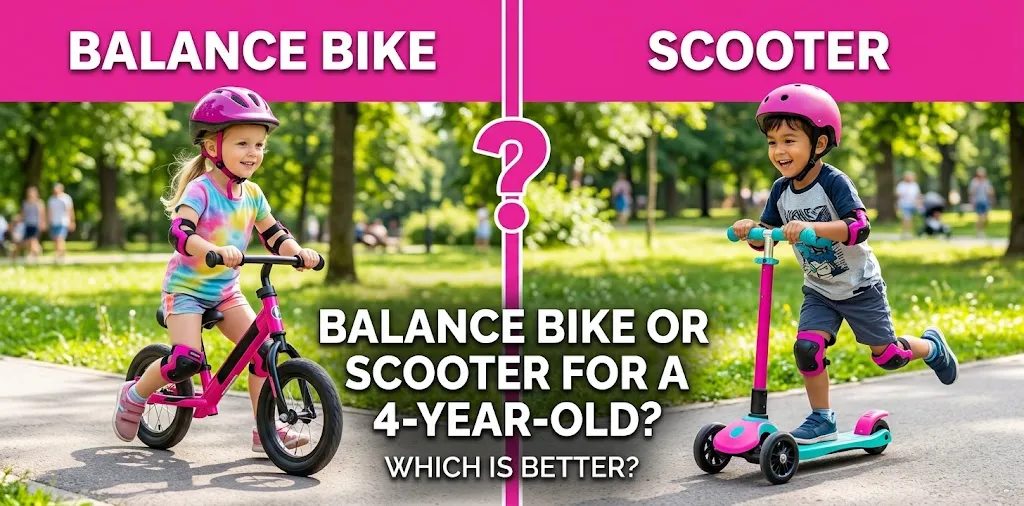
Balance Bike or Scooter for a 4-Year-Old? Which Is Better?

For most 4-year-olds, a balance bike is the better choice if the goal is learning to ride a pedal bike later, while a three-wheel scooter is often better for easy, casual fun and quick confidence. The best option depends on your child’s balance, size, confidence, and where they will ride.
At age four, children can be at very different stages. One child may already glide confidently and be ready for a pedal bike, while another may be trying their first ride-on toy.
That is why age alone should not decide this purchase.
The Main Difference Between a Balance Bike and a Scooter
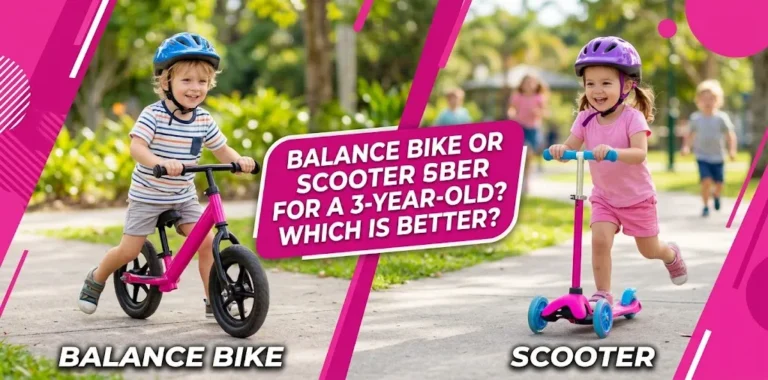
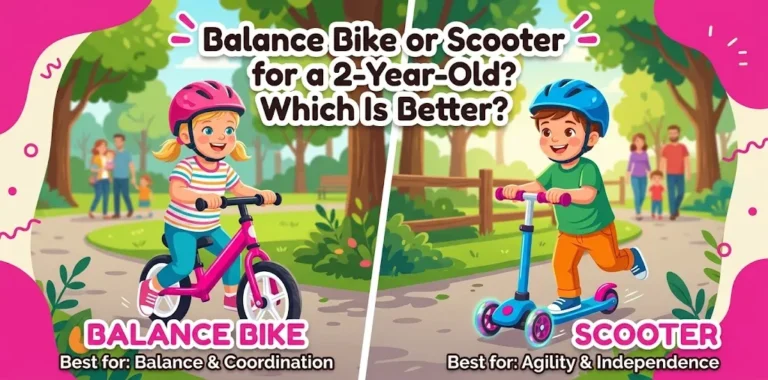
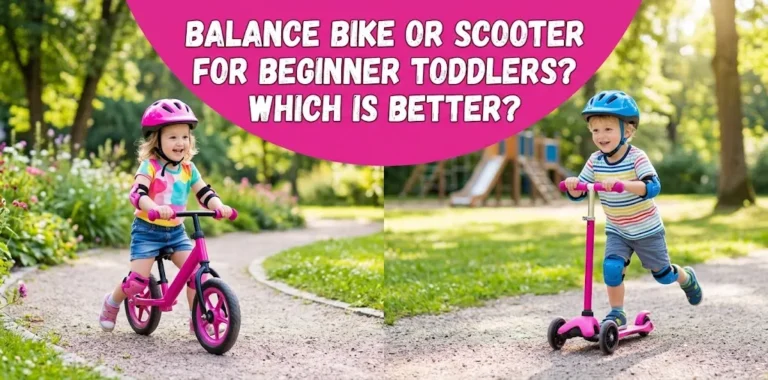
A balance bike looks like a regular bicycle but has no pedals. Your child sits on the seat, pushes with their feet, and eventually learns to lift their feet and glide.
A scooter keeps the child standing. They usually place one foot on the deck and push with the other foot. Young beginners often use a three-wheel, lean-to-steer scooter for extra stability.
| Factor | Balance Bike | Scooter |
|---|---|---|
| Main riding position | Sitting | Standing |
| Main skill developed | Two-wheel balance for cycling | Balance, coordination, steering |
| Best for learning to pedal later | Usually better | Less direct preparation |
| Beginner-friendly option | Yes, with proper sizing | Three-wheel models are often easier at first |
| Easy to carry | Usually less convenient | Often easier |
| Best for casual neighborhood fun | Good | Often excellent |
| Best for a child interested in bicycles | Excellent | Less bike-focused |
Both can provide active outdoor play and help children develop coordination. The bigger question is what you want your child to get from the experience.
When a Balance Bike Is the Better Choice
A balance bike is usually the stronger option for a 4-year-old when learning to ride a bicycle is part of the goal.
The child learns to balance on two wheels without having to worry about pedaling at the same time. They can start slowly by walking with the bike and gradually progress to longer glides.
That makes the transition to a pedal bike more natural for many children.
A balance bike may be especially suitable if your child:
- Shows interest in riding a bicycle
- Has never learned to balance on two wheels
- Enjoys riding outdoors for longer distances
- Is confident enough to sit and move independently
- Will likely move to a pedal bike soon
A four-year-old beginner can still benefit from a balance bike
Four is not too old to start.
In fact, this can be a useful age because many children have stronger coordination and leg strength than younger toddlers. A beginner may quickly move from walking with the bike to pushing, gliding, and steering.
However, proper sizing matters more than the number on the birthday cake.
Your child should be able to sit comfortably and place their feet securely on the ground. A bike that is too large can make learning frustrating and less safe.
A balance bike makes the most sense when cycling is the next goal
Imagine a child who watches older siblings ride bikes and keeps asking for one.
A balance bike can give that child a focused way to learn the hardest early skill: staying balanced while moving. Once balancing feels natural, adding pedals later may be less intimidating than trying to learn everything at once.
For a family that enjoys bike paths, parks, or neighborhood rides, this can make the balance bike a good long-term learning tool.
When a Scooter Is the Better Choice
A scooter may be the better choice when your main goal is easy outdoor fun and a simple first ride-on experience.
For many beginners, a three-wheel scooter feels less intimidating because it can stand on its own. The child remains standing with their feet close to the ground, which may feel more familiar than sitting on a two-wheel bike.
A scooter may be a better fit if your child:
- Wants something fun rather than bicycle training
- Is nervous about sitting on a two-wheel balance bike
- Needs extra stability while learning
- Will ride mostly on smooth sidewalks or paved paths
- Needs something easier to transport
- Already has strong interest in scooters
Choose the right type of scooter
For many first-time 4-year-old riders, a three-wheel scooter is usually a more beginner-friendly starting point than a traditional two-wheel scooter.
Three-wheel models can offer more stability while children learn how to push, glide, turn, and control their movement.
A two-wheel scooter may be more appropriate for a child who already has solid balance and coordination.
Which One Is Easier for a Typical 4-Year-Old?
For a complete beginner, a three-wheel scooter may feel easier at first.
The scooter can remain upright without the child needing to balance it the same way they would a two-wheel balance bike. The child can step on, push, and experiment with movement.
But easier at the beginning does not necessarily mean better for every goal.
A balance bike asks the child to develop two-wheel balance from the start. That may take more practice, but it is also why it can be more useful for a child who will eventually learn to ride a regular bicycle.
Think of the choice this way:
- Want the easiest introduction to riding? Consider a three-wheel scooter.
- Want to prepare for a pedal bike? Consider a balance bike.
The Best Choice Depends on Your Child’s Current Skills
A 4-year-old’s readiness matters more than a general age recommendation.
Choose a balance bike if your child is confident but needs bike skills
Some children are physically active, comfortable running and climbing, and excited about bicycles. They may be ready to start learning how to balance and glide on two wheels.
For these children, a properly sized balance bike can be a great fit.
Choose a scooter if your child needs a gentler start
Consider a child who is curious about riding but becomes nervous when trying something that feels unstable.
A stable three-wheel scooter may help that child build confidence through short rides and repeated practice. The child can focus on pushing and steering without immediately worrying about keeping a two-wheel bike upright.
If your child already rides one confidently, think about what comes next
This is an important situation that parents sometimes overlook.
If your 4-year-old already rides a scooter confidently, buying another beginner scooter may not add much. You may want to consider whether a balance bike would introduce a useful new skill.
Likewise, if your child already glides confidently on a balance bike, they may be getting close to being ready for a pedal bike rather than needing another balance bike.
Balance Bike vs. Scooter for Different Family Situations
| Your situation | Better choice |
|---|---|
| You want to prepare for a pedal bike | Balance bike |
| Your child wants quick, easy outdoor fun | Scooter |
| Your child is nervous about two wheels | Three-wheel scooter |
| Your child loves bicycles | Balance bike |
| You need something easy to carry in the car | Scooter |
| Your child already balances well | Depends on the next skill you want to develop |
| You mostly visit smooth sidewalks and playgrounds | Scooter can be very convenient |
| Your family enjoys bike rides | Balance bike |
How to Make Sure a Balance Bike Fits a 4-Year-Old
Do not buy a balance bike based only on an advertised age range.
A four-year-old can be much taller or smaller than another four-year-old, so fit matters.
When sitting on the bike, your child should be able to place their feet securely on the ground. They need enough control to push off, stop, and catch themselves when necessary.
Also consider the bike’s weight.
A lighter balance bike is generally easier for a young child to control, pick up, and maneuver. A heavy bike can turn a simple learning experience into unnecessary work.
Adjustability can also help if you want the bike to fit your child for longer.
How to Make Sure a Scooter Fits Your Child
For a scooter, look at stability, handlebar height, and the riding environment.
A beginner-friendly three-wheel design can make sense for a child who is still learning. The handlebars should allow your child to stand comfortably without reaching too high or hunching excessively.
Also think about where the scooter will be used.
Small wheels generally work best on smooth surfaces. Rough pavement, cracks, and uneven paths can make riding more difficult.
If your child will mostly ride around a smooth driveway, sidewalk, or park path, a scooter may be very practical.
Safety Matters With Both Options
Neither a balance bike nor a scooter is automatically safe just because it is designed for young children.
Proper fit, supervision, and the riding environment matter.
A properly fitted helmet is a smart safety measure for both activities. The American Academy of Pediatrics also emphasizes helmet use for scooter riding and distinguishes non-motorized scooters from motorized and e-scooters.
For a 4-year-old, it is also wise to:
- Start on a smooth, low-traffic surface
- Avoid steep hills during early practice
- Check that the ride-on fits properly
- Use closed-toe shoes
- Practice stopping before allowing faster riding
- Supervise young children near driveways, streets, and parking areas
A child’s confidence should grow gradually. There is no benefit to rushing them into faster riding before they can control and stop safely.
A Common Mistake: Buying Based Only on Age
Many product listings say something like “ages 3–5” or “ages 4 and up.”
That information can be useful, but it should only be a starting point.
A confident, tall 4-year-old with previous riding experience may need something very different from a smaller child who has never ridden anything before.
For example:
A confident child who already glides on a balance bike may be closer to trying a pedal bike.
Another child of exactly the same age may feel uncomfortable balancing on two wheels and enjoy starting with a stable three-wheel scooter.
The better purchase is the one that matches the child’s current ability—not simply their age.
Could Buying Both Make Sense?
For some families, yes.
A balance bike and a scooter teach overlapping but different skills, and children may enjoy them in different situations.
A child might use a scooter for quick neighborhood rides and a balance bike when practicing bicycle skills.
This can make sense if both will get regular use and your budget and storage space allow it. But you do not need to buy both just because they are popular.
If you are choosing only one, start with your child’s main goal.
What About Skipping Both and Buying a Pedal Bike?
Some 4-year-olds may be ready for a pedal bike, especially if they already have strong balance from a balance bike, scooter, or other riding experience.
But buying a pedal bike with training wheels is not always the best shortcut to independent cycling.
A child who has not yet developed confidence balancing on two wheels may benefit from learning that skill first. A balance bike can be useful for that purpose.
On the other hand, a child who already glides confidently and can control their direction may be ready to move on rather than spending money on another beginner ride-on.
So, Which One Should You Buy for Your 4-Year-Old?
Choose a balance bike if your biggest goal is helping your child learn the skills needed for independent bicycle riding.
Choose a three-wheel scooter if you want an easier, convenient option for casual outdoor play and your child would benefit from extra stability while building confidence.
For most families deciding between the two, the simplest question is this:
Do you want your child’s next step to be learning to ride a bicycle, or do you mainly want a fun and easy way to get moving outdoors?
Your answer usually points to the right choice.
Frequently Asked Questions
Is a balance bike or scooter better for a 4-year-old beginner?
A three-wheel scooter may feel easier for a complete beginner because it offers more stability. A balance bike may take more practice at first, but it is usually more directly connected to learning to ride a pedal bike.
Is 4 years old too old for a balance bike?
No. A 4-year-old can still learn useful balance and steering skills on a properly sized balance bike. Check your child’s height, inseam, confidence, and current riding ability rather than choosing based on age alone.
Should a 4-year-old use a two-wheel or three-wheel scooter?
A three-wheel scooter is often a good choice for a beginner who needs more stability. A two-wheel scooter may suit a child who already has stronger balance and coordination and can confidently control their speed and turns.
Final Thoughts
For a 4-year-old, the balance bike is usually the better investment for future bicycle riding, while a scooter is often the easier choice for immediate fun and everyday play.
Before buying, watch how your child moves and what excites them. Measure for proper fit, choose a safe place to practice, and focus on the next skill your child actually needs rather than buying based on age alone.