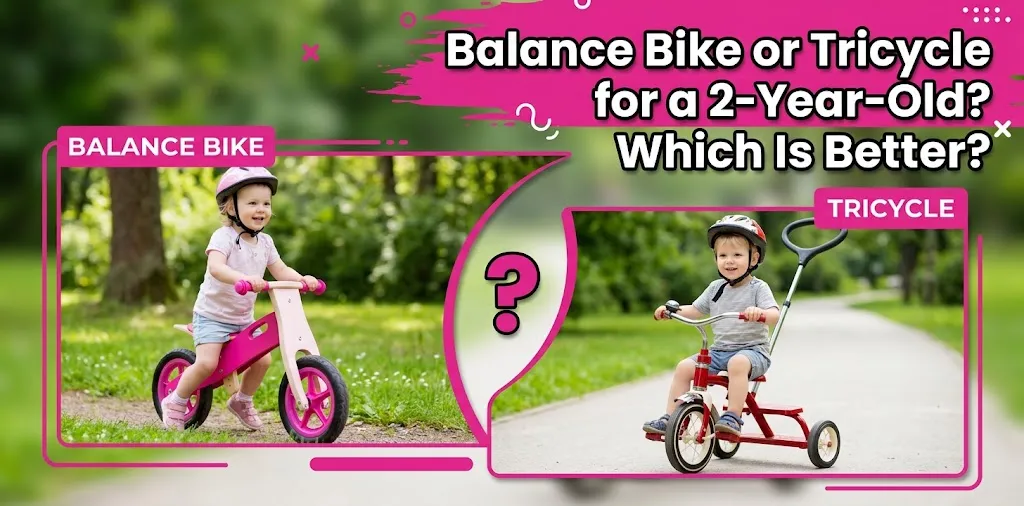
Balance Bike or Tricycle for a 2-Year-Old? Which Is Better?

For most active and physically ready 2-year-olds, a balance bike is the better choice if your goal is to prepare them for a regular bicycle later. A tricycle offers more stability and helps with pedaling, but a balance bike teaches balance, steering, and body control—the skills a child will eventually need on two wheels.
The best choice still depends on your child’s size, confidence, coordination, and where they will ride.
The biggest difference between a balance bike and a tricycle
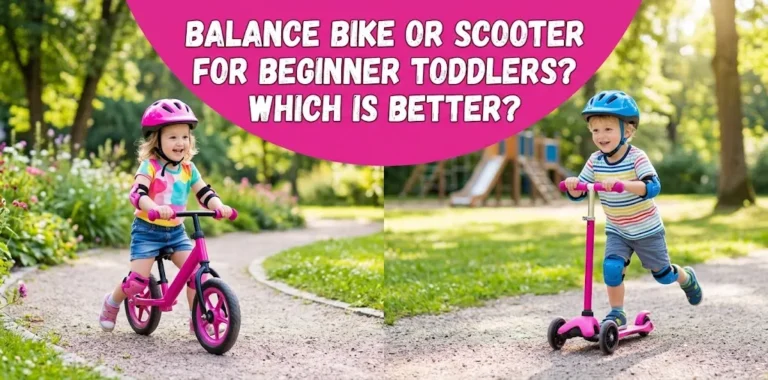
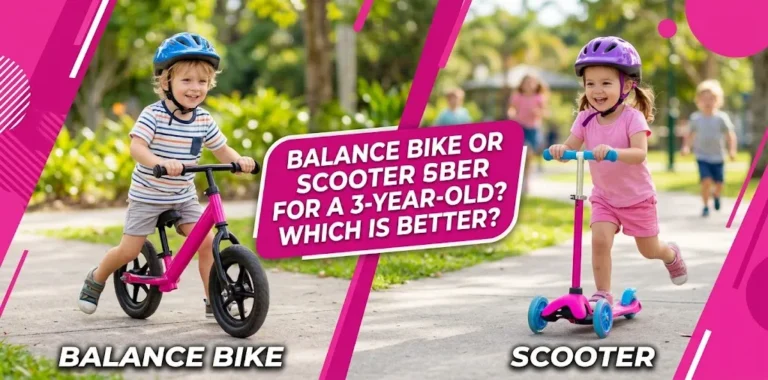
A balance bike has two wheels but no pedals. Your child sits on the seat and uses their feet to walk, push, and eventually glide.
A tricycle has three wheels and pedals. The extra wheel makes it stable while your child learns to steer and pedal.
That difference changes what each ride teaches.
| Feature | Balance Bike | Tricycle |
|---|---|---|
| Main skill | Balance and steering | Pedaling and steering |
| Number of wheels | 2 | 3 |
| Stability while stopped | Less stable | More stable |
| Helps prepare for a pedal bike | Usually very well | Less directly |
| Best for | Confident toddlers who can walk steadily | Children who enjoy stable, slower riding |
| Pedals | No | Yes |
| Typical riding style | Push, glide, and balance | Pedal and steer |
Why a balance bike is often the better choice at age 2
Learning to ride a regular bicycle requires several skills, but balance is usually one of the biggest challenges.
A balance bike lets a toddler focus on that skill without also worrying about pedals.
Your child can start slowly by walking while sitting on the bike. As confidence grows, they may begin pushing harder, lifting their feet, and gliding for short distances.
This can help them become comfortable controlling a two-wheeled ride.
A balance bike can help a child practice:
- Balancing while moving
- Steering
- Coordinating their body with the bike
- Controlling speed
- Turning
- Building confidence on two wheels
The American Academy of Pediatrics notes that bikes without pedals can help children work on balance while learning to ride.
The transition to a pedal bike may be easier
A child who already understands how to balance on two wheels has learned an important part of riding a bicycle.
Later, they can focus on adding pedaling instead of learning everything at once.
That does not mean every child will move instantly from a balance bike to a pedal bike. Children develop at different speeds. Still, learning balance first can make the next step feel more familiar.
It encourages independent movement
Many 2-year-olds enjoy being able to put both feet on the ground whenever they want.
If they feel nervous, they can slow down or stop using their feet. This can make a properly sized balance bike feel less intimidating for some toddlers.
The key is proper fit. Your child should be able to sit comfortably and place their feet securely on the ground.
When a tricycle may be the better choice
A tricycle is not a bad choice. It simply teaches different skills.
The three-wheel design gives a child more stability, which can be appealing to toddlers who are still hesitant about balancing on two wheels.
A tricycle may be a good choice if your child:
- Is nervous about a two-wheeled ride
- Loves the idea of pedaling
- Will mostly ride on smooth, flat surfaces
- Enjoys slower, stable play
- Needs more time to build confidence with ride-on toys
Tricycles allow children to practice pedaling and steering, while their three-wheel design keeps the ride upright without requiring the same type of dynamic balance as a two-wheeled bike.
Pedaling can be fun, but it is a separate skill
Some parents assume that a tricycle is automatically the first step toward riding a bicycle.
It can introduce a child to pedals, but pedaling is only one part of bicycle riding. A child who becomes comfortable on a tricycle will still need to learn how to balance a two-wheeled bicycle later.
That does not make a tricycle less fun or less useful. It simply means parents should choose based on what they want their child to learn.
Balance bike vs. tricycle: which skills matter most to you?
The easiest way to decide is to think about your main goal.
Choose a balance bike if your goal is future bike riding
A balance bike is usually the stronger choice when you want your child to develop two-wheel confidence.
For example, imagine a confident 2-year-old who already walks and runs steadily and enjoys climbing and moving around outdoors. A properly fitted balance bike may give that child a fun way to practice balancing and steering.
The child may begin by walking with the bike between their legs. Over time, short glides can develop naturally.
Choose a tricycle if your goal is stable riding and play
Now imagine a different toddler who is cautious about falling and mainly wants to ride around the patio or driveway.
A low, stable tricycle may feel more comfortable. The child can focus on sitting, steering, and eventually learning how the pedals work.
Neither child is behind or ahead. They simply have different needs and preferences.
Your child’s height matters more than the number on their birthday
Not every 2-year-old is ready for the same type of ride.
Age labels on products can be useful, but fit matters more.
For a balance bike, your child should generally be able to sit on the seat with their feet reaching the ground comfortably. A child who must stretch onto their tiptoes may have trouble controlling the bike.
For a tricycle, your child should be able to reach and operate the pedals comfortably.
Avoid buying an oversized ride-on simply because you want your child to “grow into it.” The American Academy of Pediatrics advises against purchasing a larger bike for a child to grow into because proper sizing is important for control and safety.
What about a cautious or shy 2-year-old?
A cautious toddler does not necessarily need a tricycle.
Some children feel nervous at first but become comfortable with a balance bike because they can keep both feet close to the ground.
The best approach is often to let the child explore without pressure.
You might start by allowing them to:
- Sit on the balance bike
- Walk with it
- Push it slowly
- Practice on a flat surface
There is no need to immediately teach gliding.
If your child strongly dislikes the balance bike or seems uncomfortable even after gentle practice, a tricycle may be a better match for their current stage.
Interest and confidence can matter as much as age.
Where your child will ride should affect your decision
The riding area can change which option works better.
A smooth, flat driveway or patio can work well for either type.
A balance bike may be easier for a child who has room to move and gradually build speed for short glides.
A tricycle can work well for slower riding on a protected, flat surface.
Regardless of which one you choose, young children should ride away from traffic, vehicles, driveways, and other hazards. The American Academy of Pediatrics recommends close adult supervision and protected riding areas for young children.
Which option is safer?
Neither option is automatically safe in every situation.
A balance bike can tip if a child loses balance. A tricycle can also tip, especially during sharp turns or on uneven surfaces.
Safety depends heavily on:
- Proper fit
- Adult supervision
- A safe riding location
- The child’s skill level
- The surface
- Protective equipment
The American Academy of Pediatrics recommends that children wear a properly fitted helmet when riding a bike or tricycle, and young children should be supervised while riding.
For tricycles, a low design with a stable base can help reduce the risk of tipping.
A simple way to choose between them
Ask yourself these three questions:
Does my child seem ready to balance on two wheels?
If yes, a balance bike is worth serious consideration.
Is my child mainly excited about pedaling and having a stable ride?
A tricycle may provide more immediate enjoyment.
Do I want this purchase to help prepare my child for a regular bicycle?
If that is your main goal, a balance bike is usually the better fit.
Don’t choose based only on what other parents buy
Some 2-year-olds immediately love balance bikes. Others would rather pedal a tricycle. Some children may ignore either one for weeks before suddenly becoming interested.
You do not need to force a child into one path.
A balance bike is often the better long-term choice for learning two-wheel skills, while a tricycle can be a great choice for stable outdoor play and learning to pedal.
The right answer is the one your child can safely use and genuinely enjoys.
FAQ
Is a balance bike too difficult for a 2-year-old?
Not necessarily. Many 2-year-olds can start using a properly sized balance bike by walking while seated and keeping both feet on the ground. Readiness depends more on the child’s size, coordination, and confidence than age alone.
Is a tricycle better for a beginner?
A tricycle can feel easier at first because its three wheels provide stability. However, if your goal is to help a child learn skills for riding a regular two-wheeled bike, a balance bike usually offers more direct practice with balance.
Should a 2-year-old wear a helmet on a balance bike or tricycle?
Yes. The American Academy of Pediatrics recommends helmet use for children riding bicycles and tricycles, along with adult supervision and a safe riding area away from traffic and vehicles.
The bottom line
For most physically ready 2-year-olds, a balance bike is the better choice if your main goal is preparing for a regular bicycle. It lets children practice balance and steering before adding pedals later.
A tricycle can still be the better choice for a child who wants a stable ride, enjoys pedaling, or is not yet comfortable with two-wheel balance. Before buying either one, measure your child’s fit carefully and choose a safe, properly sized model that they will actually enjoy riding.