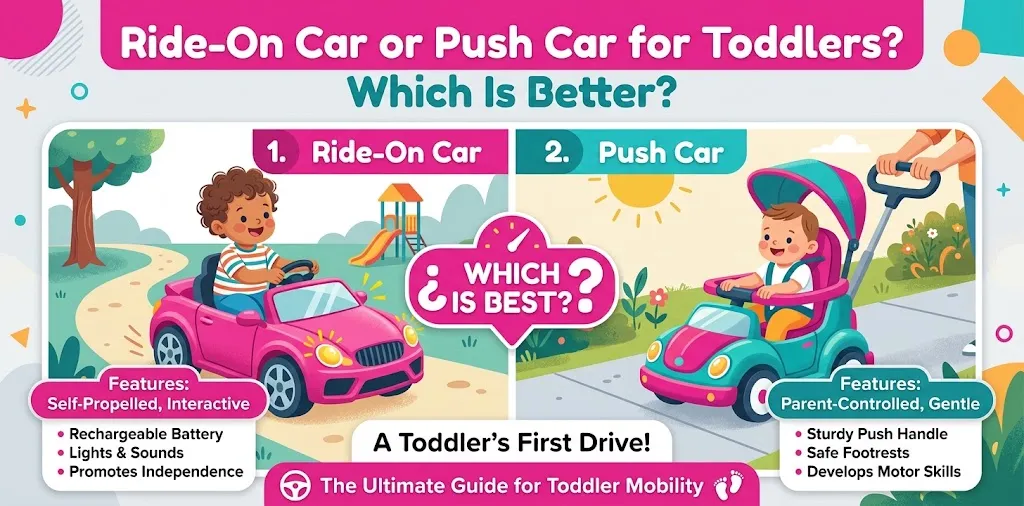
Ride-On Car or Push Car for Toddlers? Which Is Better?

For most toddlers, a push car is the better choice when the child is still learning to walk or needs help getting around, while a foot-powered ride-on car is better for a toddler who can already walk steadily and move independently. The right choice depends more on the child’s age, balance, leg control, and where you plan to use the toy than on how many features it has.
The confusing part is that retailers sometimes use “ride-on car” and “push car” interchangeably. In this comparison, a push car means a toddler car with a parent push handle, while a ride-on car means a child sits on or inside it and moves using their feet.
Push Car vs. Ride-On Car: What Is the Difference?
A push car is designed so an adult can push the child using a handle. Many models also allow the child to use the toy independently later, making them useful during the transition from stroller-style rides to self-propelled play.
A foot-powered ride-on car has no motor. The child sits on the seat, places their feet on the floor, and pushes themselves forward. This requires more balance, coordination, and control.
| Feature | Push Car | Foot-Powered Ride-On Car |
|---|---|---|
| Main user | Parent and toddler | Toddler |
| How it moves | Parent pushes, or child may push later | Child pushes with feet |
| Best starting point | Younger or less steady toddlers | Toddlers who walk confidently |
| Parent control | High | Lower |
| Physical effort from child | Low to moderate | Moderate |
| Independence | Builds gradually | Strong focus on independent movement |
| Indoor use | Often practical | Good when the child can control it |
| Steering skill | May be partly controlled by parent | Mostly controlled by child |
| Battery required | Usually no | No |
| Long-term use | Depends on design | Often useful as the child gains confidence |
The U.S. Consumer Product Safety Commission (CPSC) recommends following the manufacturer’s age guidance and choosing riding toys that match the child’s abilities.
Which One Is Better for Different Toddlers?
There is no single winner for every child. The better choice depends on what your toddler can actually do.
Choose a push car if your toddler is still unsteady
A push car makes more sense if your child has recently started walking or still needs help with balance.
You can control the movement while your toddler gets used to sitting in the car, steering, and understanding how the toy moves. Some push cars also have a removable handle, allowing the toy to become more independent as the child develops.
For children around 12 to 18 months, CPSC developmental guidance emphasizes stable ride-on designs, low seats, wide wheel spacing, and feet that can comfortably reach the floor.
Choose a ride-on car if your toddler walks confidently
A foot-powered ride-on becomes more attractive once a toddler can sit securely, climb on and off with reasonable control, and move by pushing with both feet.
At this stage, the child can begin learning how their leg movements affect speed and direction. CPSC guidance notes that children in the 12-to-18-month range may use foot-propelled ride-ons after they can walk with some steadiness.
That does not mean every 12-month-old is ready. Development varies, so the manufacturer’s age and weight limits still matter.
Choose a push car for stroller replacement-style use
If you want something for short walks around a driveway, patio, or another controlled area where you normally would use a stroller, a push car can be more useful.
The parent remains in control, so the toddler does not need to understand steering or propulsion right away.
This is especially helpful when your child enjoys sitting in a car but cannot yet operate a ride-on independently.
Choose a ride-on for independent indoor play
A foot-powered ride-on can be a better toy for a toddler who constantly wants to move around the house on their own.
It gives the child a simple cause-and-effect experience: push with the feet, move forward, turn, stop, and try again.
However, indoor space matters. Stairs, furniture corners, slippery floors, and tight spaces can make riding toys harder to use safely.
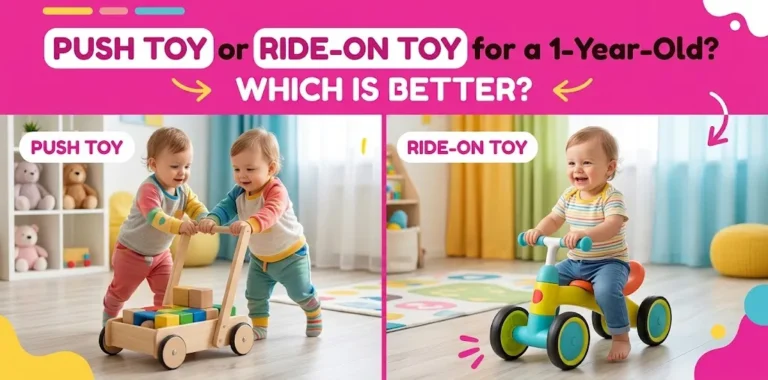
Push Car or Ride-On Car for a 1-Year-Old?
For a 1-year-old, a push car is often the easier starting choice if the child is not yet walking steadily. If the child already walks confidently and can sit securely with both feet reaching the floor, a stable foot-powered ride-on may also be appropriate when its manufacturer says it is suitable for that age.
At this age, stability matters more than appearance or extra features.
Look for:
- A low seat
- A broad, stable wheelbase
- Easy mounting and dismounting
- Feet that can reach the floor
- Smooth, predictable movement
- No unnecessary small detachable parts
- An age and weight rating that fits your child
CPSC guidance specifically notes that four or more wheels tend to provide greater stability for young children than two- or three-wheeled designs.
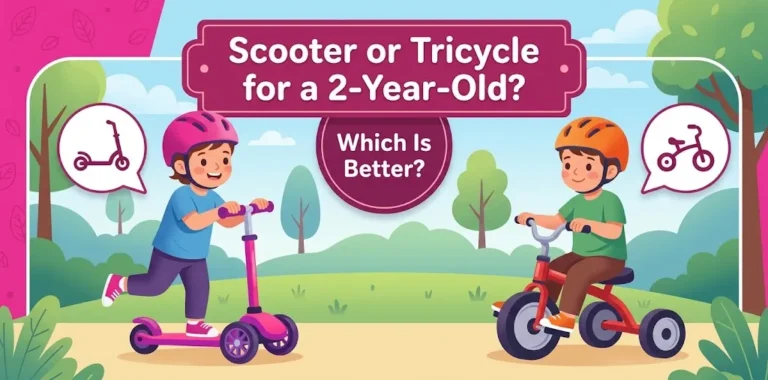
What About a 2-Year-Old?
A 2-year-old who walks and runs confidently may get more value from a foot-powered ride-on car.
At this stage, many toddlers are ready for more independent movement. They can push themselves forward, practice steering, and learn to stop before reaching an obstacle.
A push car can still be useful, though. If you want to take your child outside while keeping control of the toy, a parent-handle model may remain the more practical option.
The key is not simply choosing according to the birthday number. Look at what your child can actually do.
Which One Is Better for Indoor Use?
For indoor play, both can work, but a compact push car or simple foot-powered ride-on is generally easier to manage than a large battery-powered vehicle.
Before choosing, think about:
- How much open floor space you have
- Whether the toy can turn without hitting furniture
- Whether the wheels work well on your flooring
- How noisy the wheels are
- Where you will store it
- Whether your toddler can stop or change direction
Hard plastic wheels may be noisy on hard floors, while some wheels can slide more easily on smooth surfaces. Rugs and changes between flooring types can also affect how easily a toddler can move the toy.
A small apartment may favor a compact model that can be stored easily, while a home with a large play area gives you more flexibility.
Which One Helps With Physical Development?
A foot-powered ride-on requires more active participation from the child.
The toddler has to use their legs to move, coordinate both sides of the body, maintain a seated position, and work out how to steer around objects. That makes it a more physically active option than being pushed by an adult.
A push car still has value. A child can practice steering, reaching, sitting, getting in and out, and eventually pushing the car independently if the design allows it.
The important point is not to treat either toy as a replacement for normal walking and active play. They are play tools, not developmental requirements.
What Should You Look for When Buying One?
The safest-looking toy is not necessarily the one with the most features. For toddlers, basic design can be more important.
Stability should come first
A low center of gravity and a stable base can make a ride-on easier for a young child to use.
Avoid choosing a model simply because it looks like a real sports car. A wide, stable design may be more appropriate for a beginner than a narrow model with a more realistic appearance.
Check the age and weight limits
Always check the manufacturer’s instructions before buying.
Age ratings are not just marketing suggestions. They help indicate the developmental stage the toy was designed for, while weight limits help prevent the toy from being used beyond its intended capacity. CPSC also advises parents to follow age guidance and other safety information on toy packaging.
Consider the steering
A toddler who has never used a ride-on may struggle with complicated steering.
For a first ride-on, simple controls are usually easier to understand than multiple buttons, gears, or complicated mechanisms.
For very young children, CPSC guidance notes that a steering mechanism may not even be necessary because children may not yet be able to use one effectively.
Think about where the toy will be used
A toy intended mainly for an indoor playroom does not need the same characteristics as one that will regularly be used outside.
For indoor use, consider turning space, floor protection, noise, and storage. For outdoor use, consider whether the surface is smooth and controlled rather than uneven, sloped, or close to traffic.
What About Electric Ride-On Cars?
An electric ride-on car is a different category from a basic foot-powered ride-on.
It uses a motor and battery, so the child does not have to provide the movement with their legs. Some models also include parental remote controls.
For a young toddler, an electric vehicle can introduce a level of movement that the child may not be able to control independently. The CPSC has highlighted the need for supervision and appropriate safety gear with riding toys, and its toy guidance says children should be kept away from stairs, traffic, and pools while using riding toys.
If you’re comparing a simple push car with an electric ride-on, the push car is usually the simpler starting point for a young toddler.
Two Common Buying Situations
Imagine a 14-month-old who has only recently started walking. The child enjoys sitting in toy cars but still loses balance when moving quickly. A push car with a stable base and parent handle would likely make more sense because the adult can control the movement while the child becomes familiar with the toy.
Now consider a 2-year-old who runs around the house, climbs onto furniture confidently, and already understands how to push objects with their feet. A stable foot-powered ride-on may offer more engaging independent play because the child can control the movement instead of depending on a parent.
These examples are hypothetical, but they show why developmental ability matters more than simply choosing the toy with the longest feature list.
Safety Tips for Toddler Ride-On Cars
Ride-on toys involve movement, so supervision remains important even when the toy is slow.
Keep these habits in place:
- Use the toy according to its age and weight instructions.
- Supervise toddlers during riding play.
- Keep riding toys away from stairs and traffic.
- Avoid areas around pools and other hazards.
- Check wheels, axles, seats, handles, and other parts regularly.
- Stop using a toy if it becomes damaged.
- Keep small detachable parts away from children under 3 when they create a choking risk.
- For riding toys where protective gear is appropriate, use properly fitted safety equipment.
CPSC specifically recommends supervision for riding toys and warns that riding toys should be kept away from stairs, traffic, and pools.
So, Which Is Better?
For younger toddlers or children who are still developing steady walking skills, a push car is usually the better starting point. It gives parents more control and can provide a gradual introduction to ride-on play.
For a confident toddler who already walks well and wants to move independently, a foot-powered ride-on car can be the better choice. It provides more active participation and lets the child control their own movement.
If you’re buying only one toy, don’t start with the question, “Which car has more features?” Start with, “What can my child safely control right now?”
That simple change usually makes the decision much easier.
Frequently Asked Questions
Is a push car safer than a ride-on car for toddlers?
Neither type is automatically safe simply because it is a push car or ride-on. Stability, age suitability, the child’s abilities, the play surface, and adult supervision all matter. CPSC recommends matching toys to the child’s age and abilities and supervising children when using riding toys.
What age can a toddler use a foot-powered ride-on car?
Some children can begin using suitable foot-powered ride-ons after they can walk with reasonable steadiness. CPSC guidance for 12- to 18-month-olds describes stable, low ride-ons that allow the child’s feet to reach the floor, but parents should always follow the specific manufacturer’s age and weight limits.
Should I buy a push car or ride-on car for a 2-year-old?
For a 2-year-old who walks confidently, a foot-powered ride-on can provide more independent play. A push car may still be the better option if you want greater parental control, easier outings, or a toy the child can use while they are still developing confidence.
The Bottom Line
A push car is usually the better first choice for a younger or less-steady toddler, while a foot-powered ride-on car makes more sense for a confident toddler ready for independent movement.
Before buying, check the manufacturer’s age and weight limits, then look at stability, seat height, wheel design, steering, and where the toy will actually be used. Choosing for your child’s current abilities—not just their age or the toy’s appearance—is the best way to get a ride-on they’ll enjoy and can use appropriately.