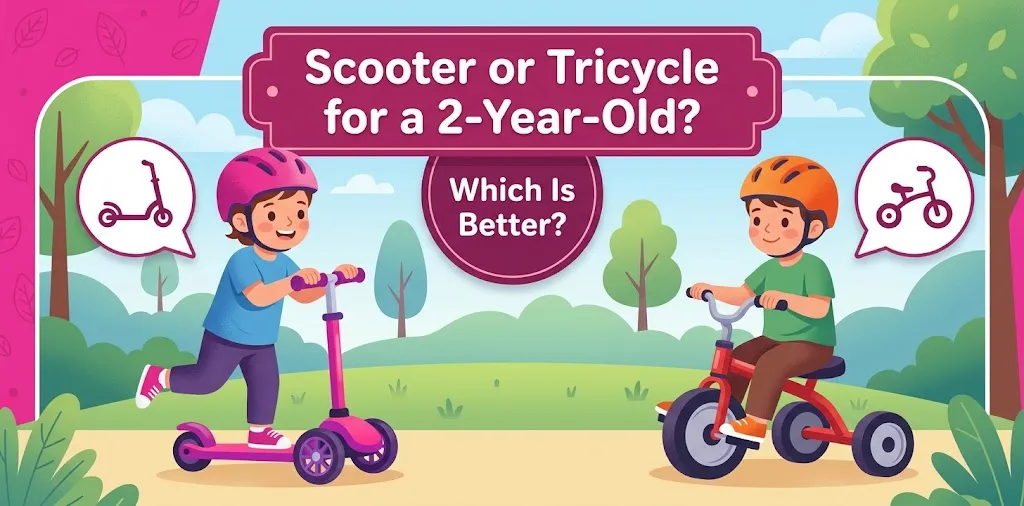
Scooter or Tricycle for a 2-Year-Old? Which Is Better?

For most 2-year-olds, a tricycle is the better choice if they are still learning basic coordination and want a stable ride. A three-wheel scooter can be a great option for a confident toddler who walks and runs steadily, enjoys standing, and can follow simple safety instructions.
The best choice depends less on the number on your child’s birthday cake and more on how your child moves, plays, and learns.
A cautious toddler may happily sit on a tricycle but feel uncomfortable standing on a scooter. Another child may find pedaling frustrating but quickly understand how to push and glide on a three-wheel scooter.
Here is what parents should consider before buying either one.
The Main Difference Between a Scooter and a Tricycle
A tricycle gives a child a seated position, pedals, and three wheels for stability. The child can focus on learning how to pedal and steer without needing to balance like they would on a two-wheeled ride.
A toddler scooter is usually ridden while standing. On a beginner-friendly three-wheel scooter, the child places one foot on the deck and pushes with the other. This requires a different combination of balance, coordination, and body control.
| Feature | Scooter | Tricycle |
|---|---|---|
| Riding position | Standing | Sitting |
| Main movement | Push and glide | Pedal |
| Balance required | More | Less |
| Beginner friendliness | Depends on readiness | Usually easier for cautious toddlers |
| Coordination skills | Standing balance and body control | Pedaling and steering |
| Storage | Often easier | Usually bulkier |
| Best for | Active, confident toddlers | Toddlers learning their first riding skills |
When a Tricycle Is the Better Choice
A tricycle often makes more sense for a 2-year-old who is still developing coordination.
Three wheels provide a stable base, and sitting can feel more secure than standing on a moving platform. Your child can concentrate on learning one new skill at a time.
Choose a tricycle if your child:
- Is still gaining confidence with active outdoor play
- Prefers sitting while riding
- Has trouble balancing while standing on one foot
- Is interested in pedals and steering
- Gets frustrated when activities require several skills at once
One important thing to remember is that not every 2-year-old can pedal immediately. Some children first sit on the tricycle, push themselves with their feet, and gradually learn how the pedals work. That is a normal learning process.
A realistic example
Imagine a toddler who loves pushing ride-on toys around the driveway but becomes nervous when standing on uneven surfaces.
That child may enjoy a tricycle more because the seated position feels familiar and secure. The goal is not to make the child master pedaling immediately. It is to give them a ride they actually want to use.
When a Three-Wheel Scooter Is the Better Choice
A scooter may be the better option for a physically confident 2-year-old.
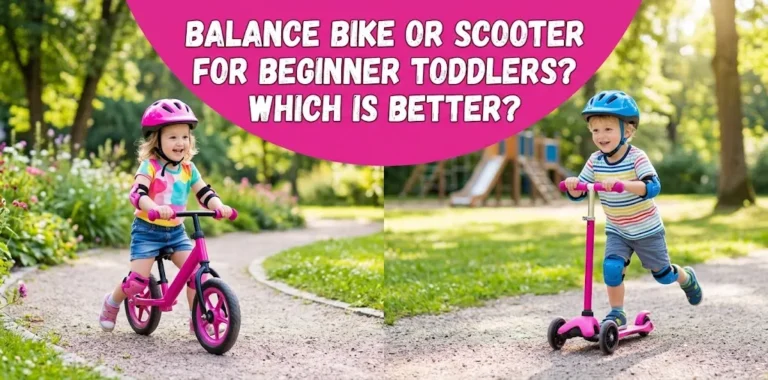
Many beginner toddler scooters have three wheels, which can make learning easier than starting with a traditional two-wheel scooter. The child still needs coordination and supervision, but the wider base can make early practice more manageable.
A scooter may suit your child if they:
- Walk and run confidently
- Enjoy climbing and active play
- Can step on and off a low platform
- Like pushing objects with their feet
- Are comfortable standing while moving
- Show interest in copying older children on scooters
For a first scooter, a toddler-focused three-wheel model is generally a more appropriate starting point than jumping straight to a two-wheel scooter.
A realistic example
Suppose your child spends a lot of time running around the park and loves pushing a toy shopping cart or ride-on with their feet.
A three-wheel scooter may feel more natural than a tricycle. They may quickly enjoy the simple pattern of pushing, gliding, stopping, and starting again.
That does not mean every active 2-year-old is automatically ready for a scooter. The child’s actual comfort and control matter more than enthusiasm alone.
Which One Is Easier for a 2-Year-Old?
For many children, a tricycle is easier to understand because it offers a seated position and a stable base.
However, pedaling itself can be surprisingly difficult for a young toddler. The child has to coordinate both feet while also steering.
A scooter removes the challenge of pedaling but introduces standing balance and pushing with one foot.
So the answer depends on which skill comes more naturally to your child:
- Struggles with standing balance? Choose a tricycle.
- Struggles with pedaling but loves standing and moving? Consider a three-wheel scooter.
- Not comfortable with either yet? Waiting a little may be better than forcing the purchase.
Think About Your Child’s Personality, Not Just Their Age
Age recommendations on products are useful, but they should not be the only factor.
Two children who are both exactly 2 years old can have very different levels of coordination and confidence.
A cautious child may need more time to feel comfortable on a scooter. A bold child may immediately want to explore one.
Watch how your toddler behaves during normal play.
Ask yourself:
- Do they walk and run steadily?
- Can they stop when you tell them to?
- Do they enjoy climbing?
- Are they comfortable trying new physical activities?
- Do they get frustrated easily when learning something difficult?
- Do they prefer sitting or standing during active play?
These answers can tell you more than choosing solely based on an age label.
Space Can Also Change the Best Choice
Your home and outdoor space matter more than many parents expect.
A scooter generally works best on relatively smooth, flat surfaces where the wheels can roll easily.
A tricycle may be more enjoyable for children who have enough open space to practice turning and pedaling.
Consider where your child will actually ride.
A scooter may be more practical if:
- You have smooth sidewalks or paved paths
- Storage space is limited
- You want something easier to carry
- Your child will practice in short sessions
A tricycle may be more practical if:
- You have a driveway, patio, or larger play area
- Your child enjoys longer outdoor play sessions
- You want to focus on learning pedals and steering
- You do not mind storing a bulkier ride-on
Safety Should Be Part of the Decision
Neither a tricycle nor a three-wheel scooter is completely fall-proof.
Three wheels improve stability, but toddlers can still tip over, lose control, or fall when turning or riding on unsuitable surfaces.
Start on a flat, open area away from cars, traffic, stairs, swimming pools, and other hazards.
For scooter use especially, a properly fitted helmet and close adult supervision are important. Beginner scooter guidance also emphasizes choosing a model designed for young children rather than assuming any scooter is suitable because it has three wheels.
Before each ride, check that:
- The product fits your child’s current size
- The handlebars are secure
- Wheels are in good condition
- There are no loose parts
- The riding area is clear and flat
- Your child is supervised
Always follow the manufacturer’s age, height, weight, and safety instructions for the specific product you buy.
Don’t Buy a Bigger Model Just So It Lasts Longer
This is one of the easiest mistakes to make.
Parents often think buying a larger scooter or tricycle will save money because the child can “grow into it.”
But a ride that is too large can be harder for a toddler to control.
Your child should be able to use the product comfortably now. If the handlebars are too high, the seat is difficult to reach, or the product feels too heavy, the extra growing room may make learning less enjoyable.
A good fit today is usually more useful than a poor fit designed for several years of growth.
So, Which One Should You Buy?
Use this simple decision guide:
Choose a tricycle if your 2-year-old:
- Is cautious or still developing coordination
- Prefers sitting while riding
- Wants a stable first riding experience
- Shows interest in pedals and steering
Choose a three-wheel scooter if your 2-year-old:
- Walks and runs confidently
- Enjoys active standing play
- Can step on and off independently
- Likes pushing and gliding
- Seems comfortable learning new physical movements
Wait before buying either if your child:
- Is not interested in riding toys
- Cannot comfortably control the product
- Becomes very upset or frightened during practice
- Is not ready for the skills required by the specific model
There is no rule saying every child needs to follow the same path. Some families eventually own both because each type of ride offers a different kind of play and skill development.
FAQ
Is a scooter safe for a 2-year-old?
A toddler may be able to use a scooter if the specific model is designed for their age and ability. A three-wheel beginner scooter, close adult supervision, a safe riding area, and appropriate protective gear can help reduce risks.
Can a 2-year-old pedal a tricycle?
Some 2-year-olds can begin learning to pedal, while others need more time to coordinate the movement. Many toddlers first practice sitting, steering, and pushing with their feet before pedaling independently.
Should I buy a scooter or tricycle first?
Start with the one that best matches your child’s current abilities. A tricycle is often a comfortable choice for a child who needs stability, while a three-wheel scooter may suit a confident toddler who enjoys standing, pushing, and active movement.
The Bottom Line
For a typical 2-year-old, a tricycle is often the easier first choice because it provides a stable, seated riding experience. But a confident and coordinated toddler may get more enjoyment from a properly sized three-wheel scooter.
The best practical tip is simple: choose based on what your child can comfortably control today, not what you hope they will be able to do next year. Check the product’s fit and age guidance, then give your toddler plenty of supervised practice on a safe, flat surface.